


Understanding Pantene’s Abundant & Strong Technology: Clinical Insights
Pantene’s new Abundant & Strong Collection increases hair density and grows healthier hair by reducing scalp oxidative stress. The technology is the result of 2 clinical studies, which are described in detail in the peer-reviewed articles published by the International Journal of Cosmetic Science (1)(2), in addition to this brief overview.
The idea began with research to understand the relationship between scalp health and hair quality. A pivotal study published in 2015 (3) revealed that improving scalp’s condition - specifically for those with noticeable scalp problems - led to healthier hair emerging from the scalp. This was attributed to a reduction in oxidative stress, or free radicals on the scalp that negatively impact both scalp health and the quality of hair fibers.
But the question remained: What about hair emerging from normal scalps? Even scalps without noticeable hair issues are exposed to oxidative stress daily, so could reducing scalp oxidative stress on a normal scalp also benefit the hair coming from it?
Answering this question requires clinical research, which is what Clinical Study #1 was designed to do.
Clinical Study #1: The Big Test that Built the Hair Retention Model
To test what happens to hair when you reduce scalp oxidative stress on a normal scalp, a team of Pantene scientists and leading dermatologists ran a 24-week, double-blinded, placebo-controlled, randomized clinical study with 336 subjects. The subjects did not have dandruff or other scalp issues yet were experiencing hair thinning.
The Study subjects were divided into 2 groups: 1) a Placebo group who used a regular shampoo and 2) a Treatment group who used a shampoo and leave-on treatment, each with a test blend containing antioxidants, minerals, pro-vitamin B5 and niacinamide. Subjects used the products regularly and checked in after 8 weeks, 16 weeks and 24 weeks for their hair progress to be measured.
The study measured the hair and scalp effects of reducing scalp oxidative stress with 10 different methods, including those to assess hair quality, scalp barrier health, hair density, and hair shedding. For a detailed overview of the findings, see the full study published in the International Journal of Cosmetic Science here.
The results showed that:
- Hair does benefit from reducing scalp oxidative stress, even if you do not have scalp issues.
- Hair density increased (Figure 1a) and hair shedding was reduced (Figure 1b) when scalp oxidative stress was lowered.
- Newly emerging hair grew in with improved hair quality
- Progress was seen as soon as the first check-in – at 8 weeks after treatment use began.
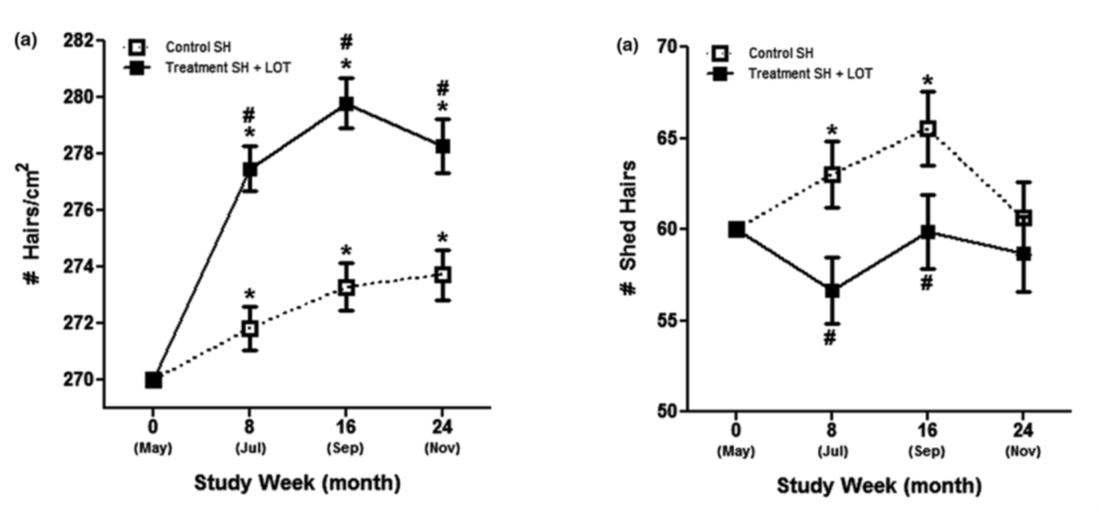
Figure 1:
(a) Hair density measures at baseline, weeks 8, 16, and 24 of treatment vs placebo (Control SH).
(b) Amount of shed hairs at baseline, weeks 8, 16, and 24 of the study.
SH = Shampoo and LOT = Leave-On Treatment.
The study results built the model from which Pantene’s Abundant & Strong Collection was created. By reducing scalp oxidative stress with antioxidant, pro-vitamin and niacinamide technology, scalp’s hold on hair roots strengthens so less hair falls and more hair stays on your head. Over time, hair density increases.
From there, a second study was designed to test the ability of one antioxidant ingredient in particular – Piroctone Olamine – to reduce hair loss by reducing scalp oxidative stress.
Clinical Study #2: Putting Pantene’s Piroctone Olamine Antioxidant to the Test
The 2nd clinical study was an 8-week, double-blind, placebo-controlled, randomized, dermatologist-designed clinical study to test the scalp health and hair retention benefits of the antioxidant Piroctone Olamine (PO) in simple shampoo and scalp serum formulas.
The study divided 144 female subjects concerned with thinning hair into treatment and placebo groups. Their hair and scalps were imaged to measure hair density, their shed hairs were counted manually and with AI, scalp oxidative stress was analyzed with biomarkers, and the health of scalp’s barrier was monitored with the established trans-epidermal water loss method known as TEWL.
After 8 weeks, those in the treatment group had significantly lower scalp oxidative stress, improved scalp barrier function, and increased hair density (Figure 2) compared to those in the placebo group. For a comprehensive overview of these findings, refer to the full study on the effectiveness of Piroctone Olamine in enhancing hair retention and scalp health published in the International Journal of Cosmetic Science here. As in Clinical Study 1, the results of clinical study 2 confirmed the effectiveness of a PO-containing shampoo and a PO-containing leave-on formula to improve hair retention and to improve the health of emerging hair.
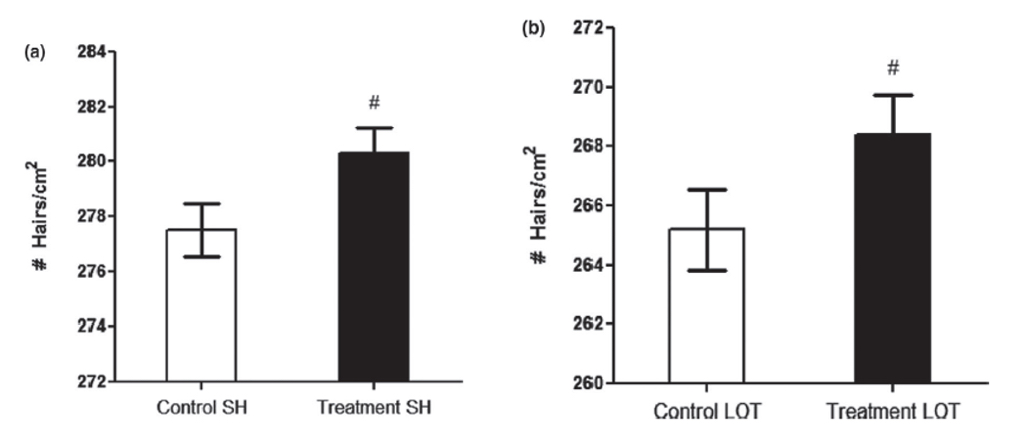
Figure 2:
Hair Density data for the Shampoo and Leave-on Treatment groups vs placebo group.
Pantene’s Pro-Vitamin Complex + Niacinamide
The result from the 2 clinical studies was Pantene’s clinically proven Pro-Vitamin Complex with Pro-Vitamin B5, Piroctone Olamine and Niacinamide. This combination has a synergistic antioxidant effect to combat scalp oxidative stress, earning its place at the heart of the Abundant and Strong regimen.
FAQs
Q. How does Pantene’s Abundant & Strong Technology help with hair loss?
A. Pantene’s Abundant & Strong clinically proven technology increases hair density and grows healthier hair by reducing scalp oxidative stress, effectively addressing hair loss. The technology is rich in antioxidants which tackle the free radicals that weaken scalp’s hold on hair at the roots. With stronger roots, hair strays stay on your head for longer, which increases hair density.
Q. Are Pantene’s Abundant & Strong products clinically tested?
A. The technology in Pantene’s Abundant & Strong Collection has undergone rigorous clinical studies. These studies tested the impact of reducing scalp oxidative stress on hair density and quality, confirming that the Pro-Vitamin Complex with Niacinamide effectively reduces hair loss.
Q. What are the benefits of reducing scalp oxidative stress for hair fall?
A. Reducing scalp oxidative stress is clinically tested to strengthen scalp’s hold on hair at the roots. The effect is less hair falling and improved hair density as more hair stays on your head for longer.
Q. Can I use Pantene's Abundant & Strong products if I don’t have noticeable scalp issues?
A. Absolutely! The subjects in the clinical studies did not have noticeable scalp issues, and their hair benefited from the treatment. All scalps are under oxidative stress, which can come from UV exposure, pollution and the environment around your scalp, so all scalps can benefit from reducing it. The reward is healthier hair growth and improved hair density.
Q. What components in Pantene’s Pro-Vitamin Complex support hair loss treatment?
A. Pantene’s Pro-Vitamin Complex includes Pro-Vitamin B5, Piroctone Olamine, and Niacinamide, all of which were included in the clinical studies behind Pantene’s Abundant & Strong collection. Their antioxidant effect reduces scalp oxidative stress to strengthen scalp’s hold on hair at the roots.
To read the studies in more detail, check out these references:
1.. M.G Davis, M. P. (2021). Scalp application of the antioxidant piroctone olamine reduces hair shedding in an 8-week randomized, double-blind, placebo-controlled clinical study. Int J Cosmet Sci, 43(Suppl1), S26-S33. doi: 10.1111/ics.12737
2. M.G. Davis, M. P. (2021). Scalp application of antioxidants improves scalp condition and reduces hair shedding in a 24-week randomized, double-blind, placebo-controlled clinical trial. Int J Cosmet Sci, 43(Suppl1), S14-S25. doi: 10.1111/ics.12734
3. J. Schwartz, J. H. (2015). The role of oxidative damage in poor scalp health. Int J Cosm Sci, 37(Suppl 2), 9-15. doi: 10.1111/ics.12289


